

Fire Regulations for Flats: A Complete Guide to Compliance & Best Practices
Fire regulations for flats in the UK are governed primarily by the Regulatory Reform (Fire Safety) Order 2005 and the Building Safety Act 2022. Whether you are a leaseholder, landlord, or building manager, knowing what the law requires and what it means in practice could save lives and prevent serious legal penalties. This guide to… Continue reading Fire Regulations for Flats: A Complete Guide to Compliance & Best Practices
Fire regulations for flats in the UK are governed primarily by the Regulatory Reform (Fire Safety) Order 2005 and the Building Safety Act 2022. Whether you are a leaseholder, landlord, or building manager, knowing what the law requires and what it means in practice could save lives and prevent serious legal penalties.
This guide to fire safety for flats outlines key principles, identifies practical steps you can take, and offers expert advice to help you keep your building safe.
Key Takeaways
- Compartmentation: The design of each flat as a fire-resistant unit is the single most important principle for containing a fire and protecting neighbouring residents.
- The ‘Stay put’ strategy: Occupants of unaffected flats to remain inside unless instructed to evacuate.
- Fire doors and alarms: Regular inspections are a legal requirement under the Fire Safety (England) Regulations 2022.
- Fire risk assessments: Ongoing evaluations are a legal duty for responsible persons under the Regulatory Reform (Fire Safety) Order 2005.
- High-rise buildings need additional safety measures, such as sprinklers and designated personnel.


Why Fire Safety Is Vital in Flats
Flats pose unique challenges in fire safety due to their design. Unlike standalone homes, flats rely on systems like compartmentation, fire doorsets, and communal escape routes to contain and control fires. Without these systems, even small incidents can escalate quickly, putting many lives at risk.
High-rise fire safety demands even stricter standards. Taller buildings must account for longer evacuation times, increased risk of fire spread, and the complexities of firefighting in multi-storey environments. For residents, understanding these risks and the safety measures in place is critical to protecting themselves and their neighbours.
Core Principles of Fire Safety for Flats
Compartmentation
Each flat is designed to function as a self-contained fire-resisting compartment. This principle ensures that fires remain confined to their origin, giving occupants time to evacuate safely.
- Fire-resistant walls and ceilings prevent spread.
- Fire doorsets at flat entrances act as barriers to smoke and flames.
- You should commission annual inspections by a certified fire safety professional to confirm compartmentation is intact.
Gerda Security’s fire door management guide covers what inspection and maintenance compliance looks like in practice.
The ‘Stay Put’ Strategy
The ‘stay put’ strategy relies on compartmentation to maintain fire safety for flats. If your flat isn’t directly affected, staying inside can often be safer than evacuating, as communal escape routes might be hazardous during a fire.
When Should You Evacuate?
- If a fire occurs in your flat.
- If the fire service explicitly advises evacuation.
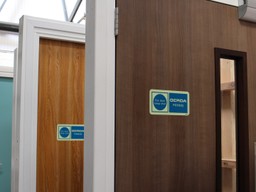
Properly maintained fire doorsets and alarms ensure that this strategy remains effective. Advanced fire doorsets can provide added protection.

Fire Risk Assessments: A Legal Requirement
Fire risk assessments are a cornerstone of fire safety for residential buildings. They identify potential hazards, evaluate safety measures, and provide actionable recommendations.
What Does a Fire Risk Assessment Include?
- Identification of ignition sources and combustible materials.
- Review of fire doorsets, smoke alarms, and escape routes.
- Inspection of communal areas for obstructions.
- Compliance checks for updated fire safety regulations.
Building owners or designated ‘responsible persons’ are legally required to carry out these assessments under the Regulatory Reform (Fire Safety) Order 2005. Failure to do so can result in unlimited fines or up to two years’ imprisonment.
Fire Door Regulations for Flats
Fire door regulations for flats are set out under the Fire Safety (England) Regulations 2022 and the Regulatory Reform (Fire Safety) Order 2005. All flat entrance doorsets opening onto communal areas must achieve a minimum FD30 rating, providing 30 minutes of fire resistance.
Key Features of Fire Doorsets
- Self-closing mechanisms to ensure doors remain shut.
- Intumescent strips and smoke seals to block smoke and heat.
- Fire-rated hinges for added durability under high temperatures.
From January 2023, fire door regulations for flats require quarterly checks of fire doorsets in communal areas and at least annual checks for flat entrance doors. In high-rise buildings over 11 metres, quarterly checks apply to all doors in communal areas.
Misusing or propping open fire doors is not only unsafe but also subject to legal penalties under the Regulatory Reform (Fire Safety) Order 2005.
Internal Fire Door Regulations in Flats
Internal fire door regulations in flats are less frequently discussed but equally important. While the primary focus is often on flat entrance doors, it is worth noting that many flat entrance doorsets in social housing are internal doorsets. Any internal door that forms part of an escape route or separates a high-risk area such as a kitchen should also meet fire-resistance standards.
If you are a leaseholder, always consult your landlord or managing agent before replacing internal doors, as substituting a certified fire door with a standard door can breach building regulations and void your insurance.
Smoke Alarms and Sprinkler Systems
Effective fire safety systems start with early detection. Smoke alarms and sprinklers are essential for minimising fire damage and preventing loss of life.
Smoke Alarm Recommendations
- Interlinked mains-powered smoke alarms are preferred for flats.
- Heat detectors should be installed in kitchens to reduce false alarms.
- Test alarms monthly to ensure functionality.
Sprinkler Systems in High-Rise Buildings
Since 2022, all new residential blocks over 11 metres in height must have sprinkler systems installed. These systems are especially critical for fire safety for flats in high-rise settings, where firefighting access may be delayed.
Keeping Communal Areas Safe
Escape routes like hallways and stairways must always remain clear. Even small obstructions can become deadly in an emergency.
Tips for Maintaining Safe Communal Areas
- Remove combustible items such as furniture or decorations.
- Report blocked or locked fire exits immediately.
- Regularly inspect lighting and signage along escape routes.
Residents and building managers share responsibility for ensuring these areas remain safe and accessible.
Fire Safety Responsibilities by Role
Fire safety in flats is a shared responsibility. Here is a summary of who is responsible for what:
If you are a resident, you must not obstruct communal escape routes, must not tamper with or prop open fire doors, and should report any concerns to your building manager promptly.
If you are a landlord or leaseholder, you are responsible for ensuring your flat entrance door meets FD30 standards and for maintaining any fire safety equipment within your property.
If you are a managing agent or responsible person, you are legally required to carry out fire risk assessments, arrange regular inspections of fire doors and communal areas, and ensure evacuation plans are in place and communicated to residents.
Modifications and Their Impact on Fire Safety
Altering a flat or building without proper approvals can compromise fire safety. Before making any changes, consult your landlord or local building control to ensure compliance.
Examples of Risky Modifications
- Replacing a certified fire door with a standard door.
- Adding partitions or walls that disrupt escape routes.
- Installing materials that aren’t fire-resistant.
Breaches of the Regulatory Reform (Fire Safety) Order 2005 can result in unlimited fines or up to two years’ imprisonment. Unauthorised changes could also void insurance claims in case of a fire.
Special Considerations for High-Rise Fire Safety
High-rise buildings (over 18 metres or seven storeys tall) require additional precautions due to their complexity.
- Firefighting equipment must be regularly inspected.
- Under the Building Safety Act 2022, a Principal Accountable Person must be appointed to oversee safety measures in high-rise residential buildings.
- Enhanced escape plans should account for longer evacuation times, and evacuation alert systems must be installed in new-build high-rise residential buildings over 11 metres and existing buildings over 18 metres. Gerda Security’s emergency evacuation systems for high-rise buildings are designed to meet exactly these requirements.
- Residents in high-rise buildings should receive written information about the building’s fire safety strategy and their role within it.
By following these principles and staying informed, residents and building managers can work together to ensure that flats remain safe, compliant, and prepared for any fire-related emergencies.
FAQs About Fire Safety for Flats
Are fire doorsets mandatory in flats?
Yes. Under the Fire Safety (England) Regulations 2022, all flat entrance doorsets opening onto communal areas must achieve a minimum FD30 rating (30 minutes fire resistance). From January 2023, these doors must be inspected at least annually, with quarterly checks required for doors in communal areas of high-rise buildings.
How often should smoke alarms be tested?
Monthly testing is recommended for all residents. Building managers should also ensure that communal alarm systems are serviced annually by a qualified engineer.
What should I do if my building’s fire escape routes are blocked?
Report it immediately to your building manager or landlord. If no action is taken, you can escalate to your local fire and rescue service, which has the authority to enforce compliance under the Regulatory Reform (Fire Safety) Order 2005.
Are UPVC doors acceptable as fire doorsets?
No, UPVC doors do not meet fire safety standards.
What is compartmentation in fire safety?
Compartmentation involves designing each flat as a fire-resistant unit, using fire-resistant walls, ceilings, and certified doorsets, to contain fires and prevent them from spreading to neighbouring flats or communal areas. It is the foundational principle underpinning the ‘stay put’ strategy.
What are the fire regulations for flats in the UK?
The main legislation governing fire regulations for flats in the UK is the Regulatory Reform (Fire Safety) Order 2005, supplemented by the Fire Safety Act 2021, the Building Safety Act 2022, and the Fire Safety (England) Regulations 2022. Together, these set out the duties of responsible persons, inspection requirements, and standards for fire doors, alarms, and escape routes.
What is the difference between internal fire doors in flats and flat entrance fire doors?
Flat entrance fire doors separate individual flats from communal areas and must meet FD30 standards as a legal minimum. It is worth noting that many flat entrance doorsets, particularly in social housing, are internal doorsets rather than external. Internal fire doors within a flat, for example, between a hallway and a kitchen, may also be required depending on the building’s fire risk assessment, but are generally the responsibility of the leaseholder or tenant rather than the building manager.


